
Hello September! 🍂🍂🍂 How is summer over and how is it back-to-school season?! I’m already missing the slower days with my gremlins and not having to rush out the door for drop-offs/pick-ups.
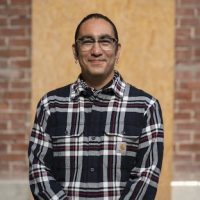
This month, I’m so thrilled to feature Tristan Ahtone, a member of the Kiowa Tribe and editor-at-large at Grist, which I’m sure you know is a fantastic investigative newsroom covering climate justice and solutions. Huge huge fan of their work.
We had a great chat about objectivity, being an Indigenous journalist, the future of the industry as it exists now, and newsroom heists.
What’s your story and how did you get to where you are today?
I'm editor-at-large at Grist. I run our Indigenous Affairs desk. And I got here through public radio, then broadcast television and eventually feature writing.
My first job was in public radio in the US at Wyoming Public Radio. After Wyoming I moved to another public radio station in Albuquerque, then went to Al Jazeera America, where I was doing feature writing for them. At some point somebody thought it would be a good idea to put me on air. I was AJAM’s reporter in their Dallas bureau.
After that, I moved into magazines with High Country News and Texas Observer before coming over to Grist.
What kind of things would you do as editor-at-large?
My duties have involved more or less overseeing the Indigenous Affairs desk, planning on how to build scale, make sure that it's running smoothly, as well as taking on large-scale projects. A lot of editing, but mostly oversight of larger projects and initiatives.
Why did you want to become a journalist?
Foolishness. I got into journalism during college and really enjoyed it, and went to journalism school afterwards and moved into the industry that way.
When I first started out, I bought into the idea of journalism being able to make actual change. And change for the better. That's really what got me into it in the first place.
A lot of my experience has thrown that idea into question over the years. But generally, it was - and still is - a belief in the power of journalism and what it could do. That's probably what keeps me hanging on.
But I'm sure we'll get into all the things that make that relationship precarious.
Why don't you go into it now? I'm curious.
I think over the years, it's this promise of what this craft can do versus the reality of the business and the power structures in place. This has really raised some very serious and critical questions for me about what is actually possible in this industry right now.
Journalism has been in crisis for the last two decades. It's only in the last few years that I've realised that what we're actually talking about is a crisis for white men who run the industry. I think for the rest of us, it offers some really great opportunities to rethink what we're doing, how we're doing it and who we're serving.
From ideas of objectivity all the way to business models - these are really grounded in, at least in the U.S. or North America, white male sensibilities. Some of this is changing a little bit. But if our starting place is what's good for the status quo, then I don't think we're actually doing what we're promising the public what we say we're doing.
This idea of objectivity is something I'm thinking about too. What are your thoughts on that, in the context of everything that you just mentioned?
This is grounded in the ideas of what the status quo is. Like the fact that any place has to have an Indigenous Affairs desk. There's no white team, right? There's no male team, right? But there are all these teams for anything that falls outside of that perspective.
When it comes to the ideas of objectivity and journalism, it's ridiculous that the industry is still talking about this, or thinking about this, as a standard that needs to be met.
I do think that the public is really keen on understanding how we do our work. And the fact that we can have this shield of, ‘Well, we're objective, but we won't tell you where we're coming from on this’ is detrimental to trust with audiences and to the future of our work.
How would you approach that given your background and your heritage. What do you think is the solution?
I guess I don't know right now. I think one of the things that we have to be aware of is being ourselves in public. I'm a Kiowa man in public, in everything that I do. So you generally know what my perspective is.
We do practice a ‘narrative objectivity’, which is sort of detached. I actually like that as a style, but not necessarily as a thought process in terms of the work that we do.
We have a perspective and we try to put it into the story and acknowledge it. We try to make sure that we're grounding our work in ideas of Indigenous self-determination and sovereignty. The facts are still the facts, but how you interpret those facts is the game in terms of what journalism is today.
One major step forward is to stop pretending that we're anything other than what we are: people with perspectives.
What kind of toll does your reporting have on you or your community? How do you deal with that?
One of the things that I'm always thinking about in our reporting, especially with Indigenous Affairs reporting, is that for us, we can't just do a story and walk away. We almost always see our sources again in some form or another. We're a reasonably tight-knit community. There’s a much higher level of expectation to get it right, or to be fair for that matter.
I need to be able to stand in front of people and say, ‘This is why I made this decision.’ I need to be able to stand by that. And if not, I need to be able to be in a position to say, ‘Yeah, I got that wrong. How can we remedy this?’
So both of those things are very different to a lot of Western journalism styles. It's sort of like - send a reporter out to a reservation, they have an idea, they pull it together quickly, they leave and they never see those folks again. There's really no accountability there. Problematic reporting: That's something that we don't have the luxury to do and we don't want that luxury either.
We also don't want to be putting out stories that an Indigenous reader already knows about. If we're going to jump into something that, for instance, is being talked about in mainstream media in major ways, we want to make sure that we're approaching that topic in a way that's going to be new and informative to our reader.
What is it like being an Indigenous man in a newsroom?
I think navigating these spaces just takes a lot of hard-headedness and probably a little bit of stupidity. You're constantly having to deal with everything from microaggressions to just outright, misunderstanding of the issues in general.
When I first started out - and this is where the stupidity comes in - I was not taking things personally and making the assumption that the editor on the other end had no understanding of the things that I was talking about. That they lacked the education to be able to handle the context, or the story, or anything that I was throwing at them.
And I think that's still true. But my perspective has shifted nowadays to think that it is partly my job to educate, but it is also partly their job to read a book. You can Google it, right?
Many editors and reporters just refuse to read. They're expecting their Indigenous colleagues or colleagues of colour to do the work for them, educate them on how they should be thinking about a story, and what they should be looking for.
Sometimes that comes from a good place and other times it just comes from a place of laziness. If I'm working at a place where colleagues are unwilling to educate themselves on very basic issues, I think it raises questions about the rest of their work, about what knowledge they're producing, what perspective they're coming from, and whether they actually know what they're talking about in these other areas?
So your question about what it's like navigating this: it's difficult. But I have always wanted to make sure that I can stay in this profession and try to get other people, like me, into this profession. And I think that just requires a willingness to fight.
What advice would you give someone starting out?
You really need to know what you want to do. When I was starting my career, I sort of knew what I wanted to be doing vaguely and I knew that it would take a lot of work to get there. I think that put me in a position to put up with a lot of shit because I wasn’t being clear with myself about what I wanted.
I tell a lot of young reporters nowadays to think of these jobs as like a heist. You're not there to steal paper from the printer. You're there to steal knowledge and experience and learn how to navigate these systems. And that is not easy to do. It's a lot for some people to deal with.
I think newsrooms are punishing places no matter who you are; as a person of colour, probably doubly or triply. Add gender into it, add all the dimensions that you want into this, and it gets immensely more difficult.
You need to know what you're willing to put up with and what that abuse is going to get you in the long run.
My perspective is not for everybody. But I think for some reporters, being able to go into a situation and know that you're going to steal everything you can from this news organisation in terms of how it does its work, allows you to think about taking it someplace else. Be it your own practice or your own news org that you start in the future. It allows you to see your work on a spectrum and dream about a future. I think that's valuable, but it's not valuable for everybody.
Oh, and knowing when to start sending follow-up emails from problematic conversations so that HR can look at them later. Keep your receipts. As a person of colour, you have to keep your receipts for almost everything that happens in the newsroom. I highly recommend it. It's the thing that will keep you safe down the line. Do not underestimate the power of receipts.
When you were a young reporter, what kind of advice did you wish someone told you?
There's actually not a lot because I'm quite happy with the mistakes that I've made and the things that I've learned along the way.
I would say one of the things that I do wish more people would have talked about or had more guidance on was thinking about ‘story’. So this is more of a craft thing than a survival thing, but they're intertwined, obviously.
I'm a big proponent of being good at your craft because it'll save you every time in a newsroom when you have to defend your work. If you can do it well, you have a leg up on a lot of your competition or a lot of your colleagues, for that matter.
For me, I wanted to be able to do investigative reporting, long-form reporting. I think learning some of those story rules would have been really helpful a lot earlier, and maybe it might have gotten me to goals that I wanted faster.
What work or story are you most proud of so far?
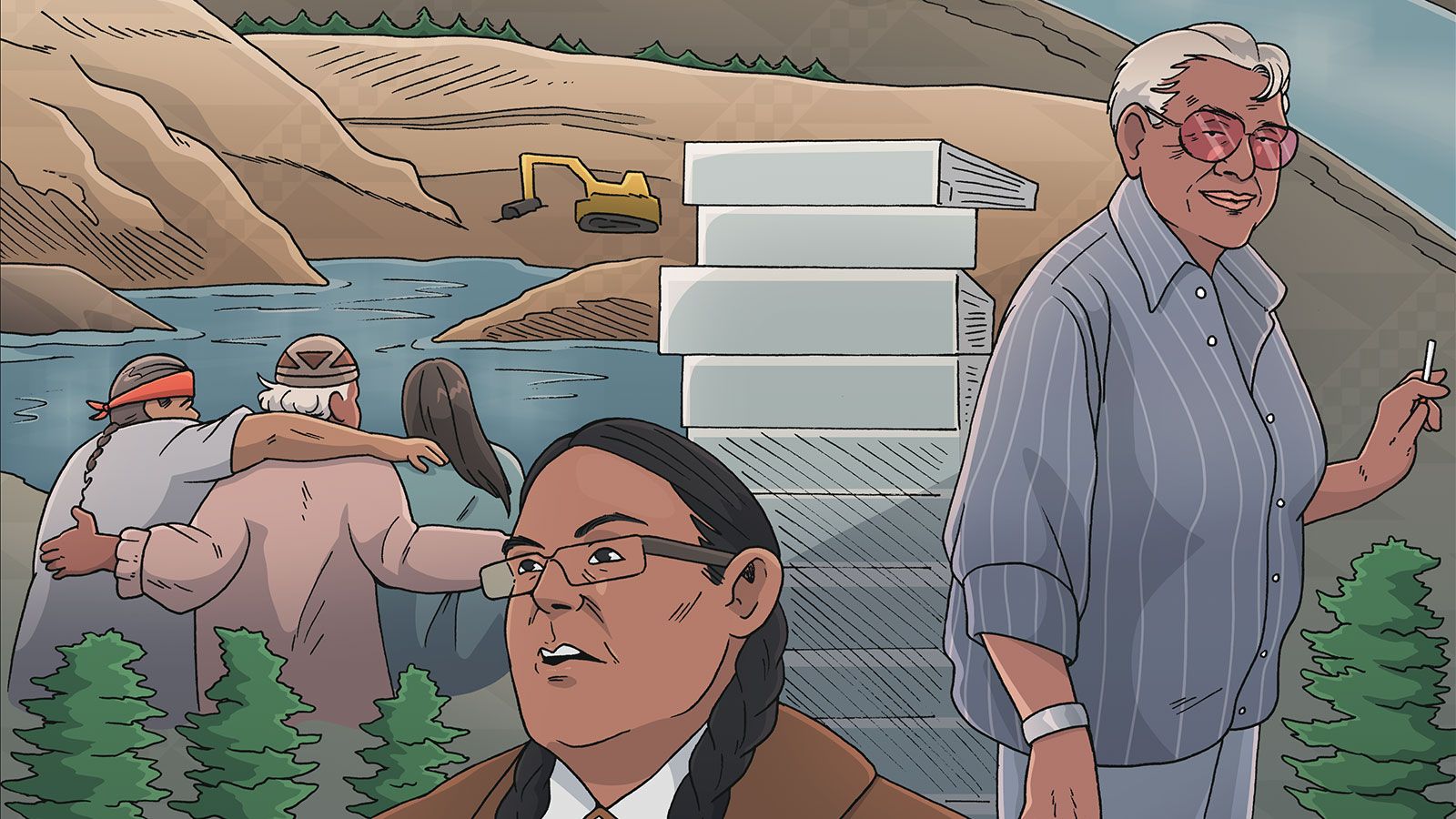
We did this massive feature on the removal of the Klamath dams in the U.S. Most of the coverage that came out before our story was about the impact of the removal. Like, now that the dams have been removed, the salmon are swimming again.
But our reporters Anita Hoffschnieder and Jake Bittle had been talking to folks who had been behind the negotiations on the removal and found this really amazing story of the people who fought to make it happen.
So I was really, really happy to work with them on that and play around with story structure and characters. All of us had to really stretch ourselves in ways that we hadn't before, and that was a great experience.
What brings you joy? What are the things that make you come alive?
Not being at work. You need to leave work, shut down and go do anything. Actually, I would argue it doesn't matter what brings you joy as long as you are not at work. I would argue there's almost too much journalism in the world right now. There's just too much content.
The idea seems to be, ‘Let's get people on our site and keep them there.’ Nobody wants to stay on a news website all day. And anybody who does, we should talk: I want to talk to you. What makes you want to stay on a news site all day?
I mean, I do my job, I do my work, and then I do other things. I try to encourage my reporters to do that as well. Put in your 40 hours and then leave. You need a weekend, you need an evening.
Why do you think it's important for people of colour to keep covering the news and being in these spaces?
Well, I think we're in an information warfare landscape at this point. So our voices are desperately needed; whether or not the industry recognises that is a different story. It’s important for people to stay in newsrooms to learn what they can and take it to build a new industry or a new practice.
The industry at large, as it exists, is not sustainable. The industry as we know it may be fundamentally different in 20 years. I do think that everything is changing and maybe even on the verge of some very large scale change, especially watching how journalism is responding to the Trump administration in the U.S. - which is poorly, I might add.
But that means there will be opportunity. We may have an industry in the future that can do better and think differently. And that's why people need to stay.
We need those folks who can come out on the other end and be ready for the changes instead of leaving the changes to the people who screwed it up in the first place.
Tristan is incredibly insightful and I learnt so much from our conversation. I wish we spoke when I was starting my career many moons ago!
I know we just returned from our summer break, but I 10000% agree that stepping away from work regularly is the best thing for us. Anyone rediscovering childhood hobbies or starting something new that is not journalism-related? Let me know!
See you all next month
Lin
Suggest a journalist for me to interview by filling out this simple, anonymous form!
Feel free to forward this newsletter to your friends and colleagues, or share it on LinkedIn 🙏🏽
And if you were forwarded this newsletter, you can sign up here or catch up on the other journalists I’ve featured so far.
Email: [email protected]
LinkedIn: @lintaylor
Instagram: @lintaylorjourno
Buy me a coffee or matcha: @journalistsofcolour
What I’ve been checking out lately:
🎥 All summer I’ve been re-living my childhood by watching nostalgic films with my kids. Classic movies like ‘Honey, I Shrunk The Kids’, ‘Winnie The Pooh’ and ‘Toy Story’. It’s been magical.
✨ Speaking of magic, Jungle’s latest album ‘Sunshine’ is breathtaking. The music, the videos, choreography, dancers - everything is perfection! Seeing people exude joy while doing something they excel at is exhilarating. We need more of this energy and art in the world! 😍
📸 And actually speaking of art, I’m loving everything that photographer @szilvesztermako is doing right now. Every photo he takes is a painting.
