
Hello October and hello to my new subscribers! 🎃🍂
We have TWO months left of 2026. This would normally make me panic, but this year, I’ve been consciously trying to care less about productivity. So, what happens when you pause? Well for me, I realised I don’t really know who I am outside of the daily news cycle. Which is rather depressing but I am un-learning a lot of things!
When I first spotted signs of my unhealthy attachment to journalism last year, I decided to find people who have successfully branched away from a traditional media career. That’s how I ended up chatting with the very interesting Suyin Haynes.
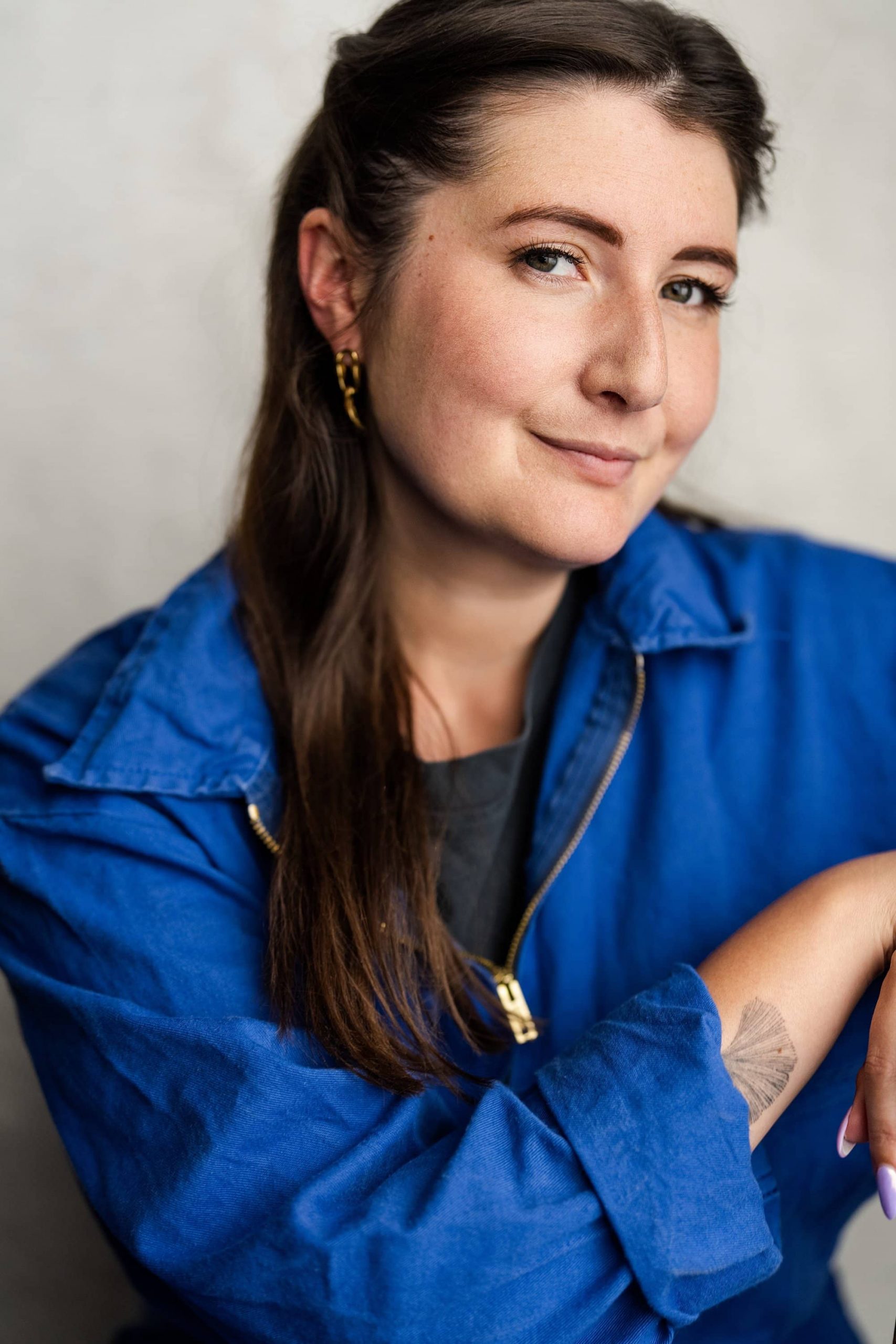
Suyin is a lecturer, writer and academic. She was also gal-dem’s editor-in-chief and a senior reporter at TIME. Last year, she co-founded New Tide Media, which is a UK network that amplifies East and Southeast Asian journos, voices and stories. (I’m part of their board!)
What are you up to at the moment?
After ten years in journalism, I am moving from one precarious industry into another as I’ve just started my PhD in Visual Culture. It’s a four year long joint project between the University of Westminster and the Royal Geographical Society, where I’ll be exploring the RGS’ collection of colonial-era archival photographs in collaboration with students.
Alongside this, I’m a Lecturer in Journalism at City St George’s, University of London, where I mainly teach on the MA Journalism course. I work on freelance projects too, mainly with The Voice of Domestic Workers, and sometimes writing / journalism commissions and projects if I feel particularly compelled (and have the time).
I also run two newsletters: my project Ginkgo Leaves, and my collaborative project with my creative partner Jon Bellebono, fragments.
How did you become a journalist?
I didn't do journalism as a degree. I think the great thing about journalism is that there are so many different routes into it. As someone from a working-class, immigrant background, and the first of my family to go to university, I didn't really think journalism was for me.
I did international relations and history at undergraduate level in London. After graduating in 2016, I got an internship at TIME Magazine in London, which was a bit too good to be true because I was paid a decent wage. I don’t quite know if that same kind of opportunity is around anymore. I always try to balance healthy realism alongside optimism and ambition when I’m talking about the media industry with my students.
After my internship at TIME, I applied for a role as an audience and social media editor in the Hong Kong bureau. In 2019, I moved back to the UK and I became a senior reporter for TIME covering gender and culture stories everywhere outside of North America.
Did you pitch that, or did they have a job opening that you applied for?
They had an opening for a reporter, and I decided this was what I wanted to focus on. I'd also been involved with gal-dem magazine, which started when I was in university, so thinking about underrepresented communities was always a big thing for me.
I was with TIME in the UK for two years, and then an opening at gal-dem came as their head of editorial. It was totally different compared to when I left the UK in 2017, when we were a group of mates doing it together on a shoestring.
By the time I returned to gal-dem in 2021, it was a proper business. That comes with all of its triumphs and challenges - a major challenge being money, which we ran out of in 2023. The operation closed down, sadly, in the spring, and I alongside the whole team lost our jobs. I decided to go freelance, and have been doing a variety of things since starting the PhD this autumn.
I do still think gal-dem's a really big loss for the media landscape in the UK. In one way, it's really good that there's a lot of other publications and voices that have sprung up. Not everything can rest on the shoulders of one publication.
Over the last three years, I feel like I've been able to do a lot of different things that have expanded my practice beyond traditional print and digital journalism, which has been really enriching for me.
As a freelance journalist, I’ve written for lots of different and new places, including The New York Times, CNN, Al Jazeera, Jacobin and more. But I have also used my creativity and background to work with museums on their interpretation and storytelling, or support with campaign organisations with their communications, or collaborate with The Voice of Domestic Workers on their training and leadership programmes.
A major change for me was also a move into education. In 2023, I became a Visiting Lecturer at City St. George's, and then became staff the following year teaching on the MA and BA Journalism programmes. Alongside this, I’ve just finished my MA in Southeast Asian Studies at SOAS.
What's it like to reinvent yourself, and not go down this linear, traditional route?
It was really odd because getting made redundant wasn't out of choice and going freelance wasn't out of choice. But I am really glad for it because I've been able to challenge myself. It's been fulfilling to be able to pick and choose the projects that I want to do.
Even though these might not make a ton of sense or might feel slightly random, it does feel cohesive for me. The through line threading it all together is exploring and platforming underrepresented narratives with a social justice lens or focus, and that has continued through to my PhD research now.
In this really precarious industry, the more strings you have to your bow, the better. Diversifying what you're able to do is so great for your own skill development.
I’ve been able to meet people and work on projects that are so fascinating, which I wouldn't have been able to do when I was in my regular job. Diversifying is also good in terms of thinking about income and not relying on one thing too much.
There have definitely been moments of instability and uncertainty. There’s no staff job benefits in freelancing, but I feel like it's given me a degree of autonomy in a way that's been quite freeing.
Do you still see yourself as a journalist? How do you choose the projects that you do?
I thought about that a lot last year as I was rebranding my website, and even more so now I’ve started the PhD. ‘Journalist’ doesn’t quite fit in the same way it used to, and I’m very much at peace with that now.
I've worked with the migrant domestic worker community in London for the last three years, and if I was wearing my journalist hat, I would be thinking, ‘I would love to cover this story.’
But actually, in that relationship, I feel like my skills are better used to support them in navigating these media opportunities, or building confidence and skills to be able to share their stories of survival for the very first time. It feels like I'm contributing to something that's maybe greater than what I could have done with a journalistic story.
How has your heritage and family background influenced your journalism?
I'd always been interested in writing, and was always interested in magazines and reading. I used to read my auntie's old copies of TIME when we were on summer holidays in Malaysia. I used to buy Elle and Grazia and all the glossies with my first wage from my weekend job at Boots.
My parents didn't go to university. My father left school at 14. My mum came here to work for the NHS from Malaysia. With neither of them having a university education or a familiarity with the media industry (and why would they!), I had to figure it out alone.
I didn't really see that much representation in British media of anyone that had similar experiences to me, which is why it was really important to get involved in gal-dem when it first started in 2016. It was a platform founded by Black women, and the fact that it was open to all people of colour from marginalised genders felt really significant.
I think it led me to these interests and thinking about the stories that get slightly lost or misrepresented, or maybe have been told in ways that I've found personally a bit egregious.
My interests and focus on East and Southeast Asian storytelling also comes from my heritage and my connection to that part of the world.
How did you learn how to navigate newsrooms? What kind of advice would you give?
When I was starting out, gal-dem was so invaluable because it was firstly a place to get professional experience, even though we were all figuring out what we were doing as we went along.
But the personal network that it created was really important. Some of the people from that time are still my really close friends and collaborators today. I have written more about this and my other career advice here.
My advice to people starting out is that when you're networking or making connections, don't always think about the editor or the person that's hiring. Think about the people that are at the same level as you - they will be your future collaborators, creative partners and colleagues.
Networks are important too, like New Tide Media Network. We founded that because I feel like the US has such a strong tradition of AAJA, NABJ, and we just don't really have that in the UK. There's ‘We Are Black Journos’ founded by Hannah Ajala, but not too much else.


Getting to know people who have similar interests and building those networks, I think that's really important rather than feeling alone, which is definitely how I felt after going from gal-dem into the working world.
It was really scary and I definitely had tearful moments, but I feel like it would have been even harder if I hadn't had that network around me.
Can you talk about some of those moments?
One very basic example is when I was doing my internship at TIME. I remember I wrote something. It wasn't very good. It was just a simple news brief and the editor messaged me saying:, ‘What is this? I don't understand it.’ And I was thinking, ‘Oh my God, I've massively messed up and it's literally my second week.’
But news moves so fast and yes, your mistakes matter but what matters more is how you learn from them. I remember that was probably my first time having a cry in the work loo.
There's also been times where I've covered really hard stories that I found personally affecting and I did not have the tools or felt equipped to be able to do that. I was quite young at the time.
What I'm trying to do in some of my teaching is embed these principles of trauma-informed reporting and care for both yourself and your subject into the students. Getting them to think about that approach at an early stage.
Something I've always found helpful is having a career advisory board, like three people that you really trust. When you have these crossroads moments or decisions to make, talk to them about it and they're your sounding board. That's been really helpful for me when I've had hard things to navigate.
What kind of advice or tips did you wish you knew when you started? What would have helped you?
We're in such a precarious industry. The reality is: redundancies happen all the time, instability happens all the time. So not getting complacent and making the most of every opportunity and every learning opportunity, every travel opportunity, every chance to upskill so that you can add the strings to your bow as an individual.
This might sound self-centered, but it’s really important to not let your identity get too tied up in the identity of where you work; to remember yourself. I think that was a mistake I made.
Not being afraid to own sensitivity and not being afraid to share that. Journalism has such a legacy of everyone being hardened, or objective or distant from what we're covering. But I think sometimes that's just not helpful. We're all human and it's okay to express emotion. I would hope that environments are supportive of that. Or you can at least build your own environments that are supportive of that.
What does it mean to be unbiased and impartial?
I think we just have to accept that everything is biased. And I do talk about this with my students - from the person that you decide to interview, to the headline that you propose, to the publication that I try and write for as a freelancer. All of that is a conscious choice.
If we look at the language used in headlines around the genocide in Gaza, for example, there's clear bias in that. I don't think it is possible to be totally unbiased.
Why are you still working in this industry?
One of my fundamental beliefs is people's capacity to change, and I feel like the media has a massive, massive role to play in that. After 10 years and having had all these different experiences, I feel like I'm in a position where I can share the knowledge and the skills that I have to try and effect some of that change.
I have seen the impact. Whether that's working with students or working with underrepresented communities or writing my own stories, I do like to think that maybe there was a moment of discovery for somebody, or a slight shift in opinion, or a moment of revelation or understanding something they - or I - didn't know before.
Those moments are really important to me and I'd like to create more of them.
What brings you joy and how do you protect your energy?
I think it's really important to practice saying 'no'. Little Simz did a great interview about this, and it's something I wish I had done more of earlier in my career. It's not easy to put up boundaries but it's so necessary.
I also think as well as having friends in the journalism sphere, having friends outside of it is really important and can help put things in perspective. Spending time with them, going out and having fun together always brings me joy.
And switching off my brain a little bit!! I love watching Drag Race, Real Housewives, Made in Chelsea, Selling Sunset etc - sometimes my brain just needs a bit of a massage that those kinds of shows provide.
I’ve worked in legacy and traditional media nearly my whole adult life, so seeing people do things differently, take on journalism-adjacent jobs and experiment, is really inspiring. It feels less rigid, more balanced and perhaps even healthier. Where to next?!
See you all next month
Lin
Suggest a journalist for me to interview by filling out this simple, anonymous form!
Feel free to forward this newsletter to your friends and colleagues, or share it on LinkedIn 🙏🏽
And if you were forwarded this newsletter, you can sign up here or catch up on the other journalists I’ve featured so far.
Email: [email protected]
LinkedIn: @lintaylor
Instagram: @lintaylorjourno
Buy me a coffee or matcha: @journalistsofcolour
What I’ve been checking out lately:
🗡️ 🍰 Like the rest of Britain, I am of course watching Celebrity Traitors and Bake-Off. Can’t say no to the fabulous Nigella and an unhinged Richard E. Grant (RIP)!
❤️ I also watched 70 UP, which is the final installment of the iconic documentary that has followed a group of Brits every seven years since 1964. I found it really profound and moving.
📚 As it’s not out yet in the UK, I started reading an e-sample of There Is No Place For Us by journalist Brian Goldstone about America’s working homeless. It won the Pulitzer Prize, and boy, it is so heartbreaking but stunning. (I’ve obviously pre-ordered it!)
