
G’day friends and a big hello to May! ✨
It has again been a pretty heavy start to the month - more media layoffs and more threats to press freedom, despite the huge need to document conflicts, injustices and human rights violations.
I started this newsletter in late 2025 as a way to combat my despondency when I found myself losing faith in the industry - not in journalism itself, but the ecosystem around it.
I’m so glad I made space to platform other journalists of colour. Because every month, I am reminded of how much this work still matters, especially for the people who are excluded from or misrepresented in (white) mainstream media. For me, as an Australian, the most obvious example of this is the media’s treatment of our First Nations people.
This week, I was rocked by the disappearance and murder of a beautiful 5-year-old girl Kumanjayi Little Baby in Alice Springs. My daughter is 6 and I can’t even begin to imagine the heartbreak that the family is going through. But what was more disturbing was the way the media portrayed the grieving - and rightfully angry - local community.
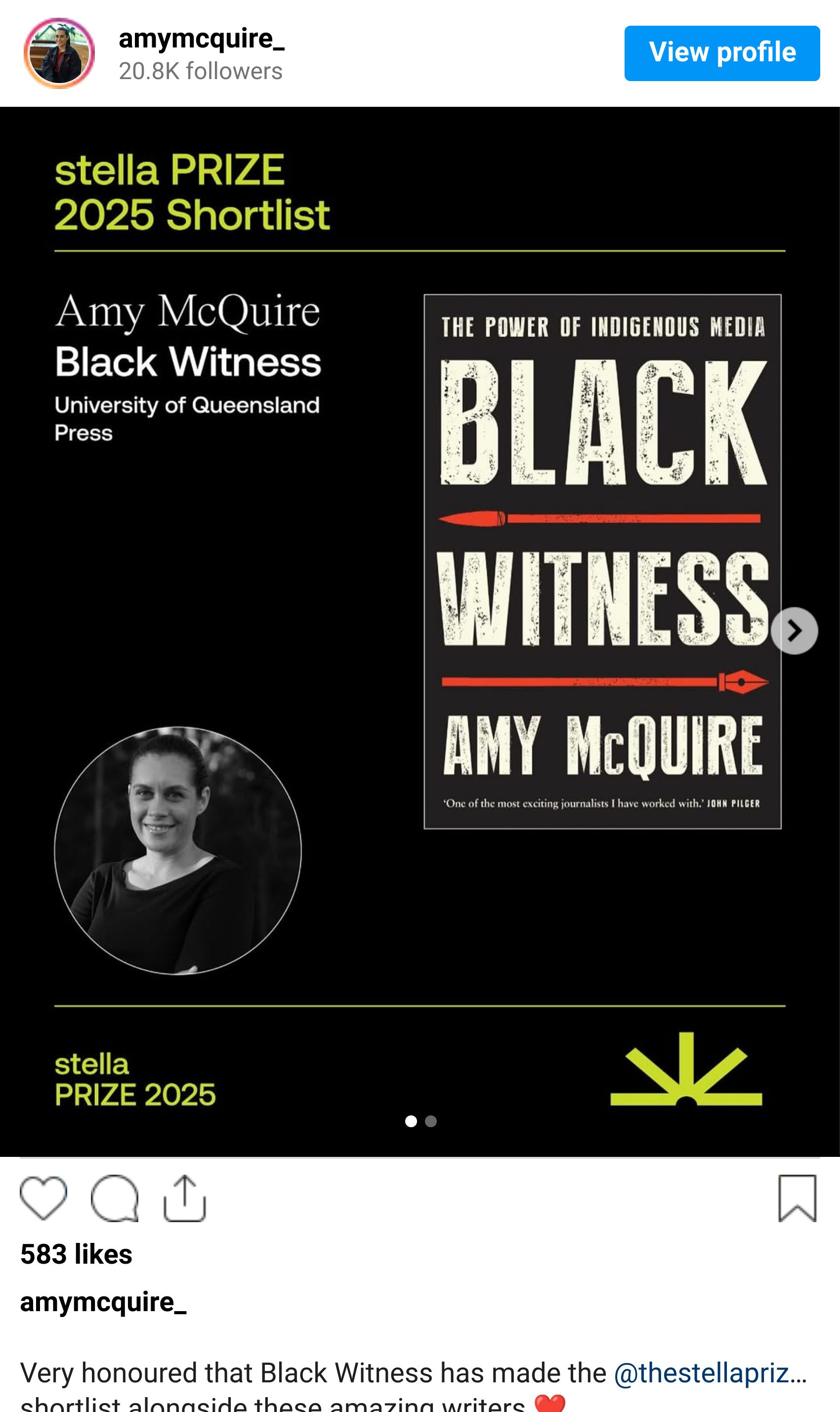
It’s something that my featured guest Amy McQuire has aptly written about in her fantastic newsletter Black Witness.
Amy is a Darumbal and South Sea Islander author, researcher and journalist - an absolute rock in the Indigenous Australian community. Her work on Indigenous femicide, disappearance and injustice is uncomfortable, pioneering and urgent.
How did you begin your career and get to where you are today?
My career began straight out of high school when I was 17. I was lucky enough to be offered a journalism cadetship at a small independent Indigenous newspaper in Canberra (Australia's capital) back in 2006. I had grown up on my traditional Darumbal country in Rockhampton, Central Queensland, so it was a huge move for me.
At the time, the National Indigenous Times (NIT) had a full-time staff of 3 (including me), and was published out of the basement of the editor's house. But it had a reputation for punching well above its weight. It broke a lot of big stories, one of which had resulted in the Australian Federal Police raiding the office (and my editor's house), only a couple of years prior.
It also so happened that I had started my journalism career in the midst of one of the biggest ruptures in Indigenous affairs in recent memory which resulted in a media-driven moral panic. The mainstream media or colonial/imperial media were publishing dehumanising stories about child sexual abuse in remote Aboriginal communities, in ways that painted Aboriginal culture as a whole as savage, punitive, and innately violent.
These stories would later lead to the most racist piece of legislation being passed in recent memory - the Northern Territory intervention. NIT immediately started publishing the truth behind the media beat-up.
It was a birth by fire, but an essential one because it cemented this idea, which is core to my career - that the media is not objective, or neutral or 'truth tellers' but rather, often another apparatus of state-sanctioned violence, and that a key pillar of Indigenous media is to resist and present counter-stories, and to act as disrupters rather than 'informants' or even translators.
Since then, I've worked across many different Indigenous publications and mediums, and have gravitated towards issues of justice. My main focus is on disappeared Indigenous men, women and children and black deaths in custody.

Why did you want to become a journalist?
I never aspired to be a journalist. I wanted to be a writer and tell stories. Now I'm glad I became a journalist because I see the practice as a form of storytelling.
How did you learn how to navigate traditional newsrooms? What has your experience been like in these spaces?
I have worked in only two mainstream newsrooms - BuzzFeed News Australia and a regional newsroom in my hometown, and these were only short stints. I have never wanted to be in mainstream or traditional newsrooms. I see Indigenous media and other forms of independent media as the place where you can make the most impact.
I don't fully believe in diversifying newsrooms, although I can understand why there is a necessity to have people of colour working in media institutions. I've seen so many talented Indigenous journos come out of these places with horror stories of racism and often they leave journalism. For me it’s similar to pushes to diversify the police or jails. It doesn't end up fundamentally changing structures that continue to oppress our people.
How does your heritage influence the journalism you do?
I think it influences it in every way - my way of being a journalist is directly tied to my identity as a Darumbal and South Sea Islander woman. My journalism changed a lot when I moved back to my hometown. I was drawn to certain stories by signs and 'coincidences', which were not really coincidences. My journalism is also based on relationships and relationality that we hold as Indigenous people.
What is it like to be an Indigenous journalist in the newsroom today?
I think it is very difficult for many Indigenous journalists working in Australian newsrooms. We have a lot more representation on our screens than when I was growing up, but many black journalists experience racism within these institutions and there is no accountability or follow through other than just leaving.
Australia has never come to terms with its history of genocide, and how white supremacy has been engrained in institutions, so it is very difficult for Indigenous journalists having to navigate these different and often interlapping forms of racism.
There is also enormous silencing within Australian media - you can not do the stories that are most important to your communities, because the Australian media reports for an assumed public that is overwhelmingly white.
What does it mean to be "unbiased" and "impartial" in this political era, as a person of colour? Is it even possible?
It's not possible because it was never possible. Whiteness is seen as objective and normative. It is what every other thing is measured against, whether close or distant. No-one is objective especially in media.
I also don't think objectivity in reporting is something that we should aspire to as an ethical standard because of the way it further silences marginalised and underheard voices, and also how it can result in false equivalences that conceal violence and power.
What's a project that you're most proud of?
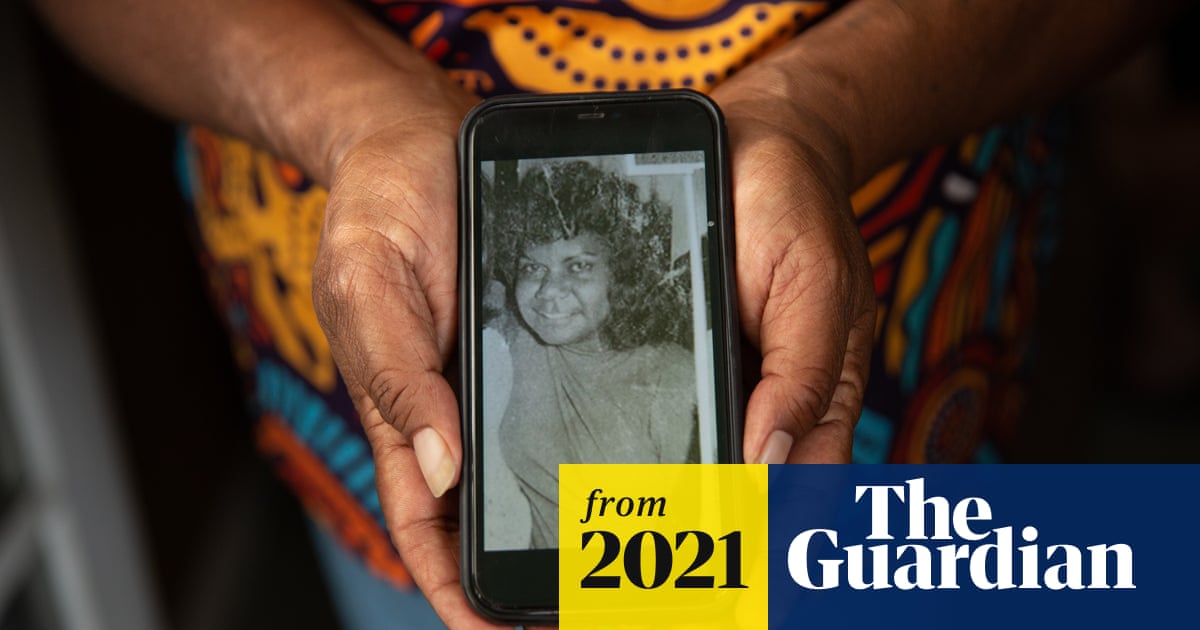
I think one of the stories I am most proud of is Aunty Queenie Hart, whose life was stolen from her by a white man back in 1975 in my hometown. That white man walked free - but with the support of Aunty Queenie's family, we were able to fundraise to take her body back to her traditional Wakka Wakka country to be buried with her family.
Journalism at times is very difficult, especially since your work deals with intergenerational trauma and injustices. What brings you joy and what do you do to protect your energy?
I find a lot of joy in relationships I have with a lot of Indigenous people across the country - although we have a history of trauma, Aboriginal and Torres Strait Islander people have great sense of humour!
Often it's so nice just to go sit and listen and yarn and learn. I realise I'm in such a privileged position to be able to do that. I also take a lot of joy in the sophistication of our thinking, and the expertise of our elders, who hold so much knowledge that is often not recognised.
Being in England, I am surrounded by people who talk in riddles and dance around what they mean. It can be exhausting! So you don’t understand how bloody refreshing it is to hear from Amy, who is unapologetic and full of conviction.
We need more of this energy in the world, whatever the industry. I hope it fills some of you with hope and strength to keep plodding along 💪
See you all next month,
Lin
Suggest a journalist for me to interview by filling out this simple, anonymous form!
Feel free to forward this newsletter to your friends and colleagues, or share it on LinkedIn🙏🏽
And if you were forwarded this newsletter, you can sign up here or check out all the other journalists I’ve featured so far.
Email: [email protected]
LinkedIn: @lintaylor
Instagram: @lintaylorjourno
What I’ve been checking out lately:
🐷🗡️ For the last decade, I have mostly binged watched Korean and Chinese dramas. So, of course, I devoured the hugely popular Pursuit of Jade on Netflix. I dunno who I loved more - the male lead, the female lead, the uncle or the villains?? I loved the Mulan vibes of this series.
📚 Now that I am out of the PoJ vortex, I have been reading Fundamentally by Nussaibah Younis. Sharp and hilarious! (I can’t stomach any more romantasy at the moment!)
🤔 With my youngest child happily in nursery and the weather getting warmer, I am desperate to find some hobbies that don’t involve screens or much money. I already exercise, read and love cooking. Do you set time aside for hobbies?! Any suggestions - let me know!
